


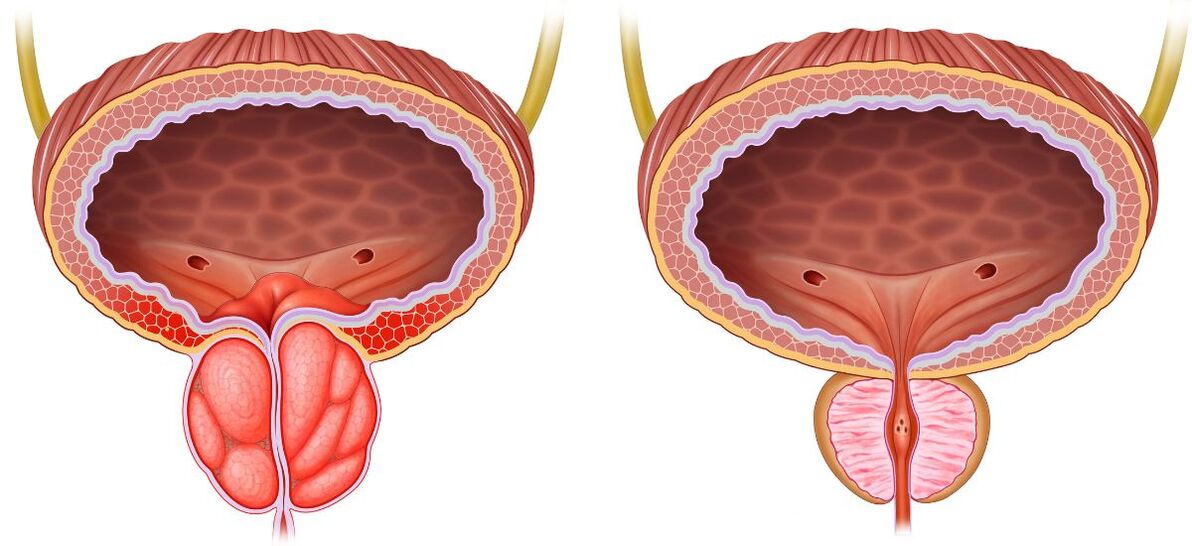
Prostatitis is a frequently diagnosed disease.If previously it was detected mainly in men over 45-50 years old, today it is often detected at the age of 35 and even earlier during standard examinations.What is this about?What causes inflammation of the prostate gland (prostate gland) in men, why can it appear in young patients?Let's find out!Let's also consider issues related to the treatment and prevention of the disease.
Why does prostatitis occur?
To determine the cause of prostatitis, you must first understand its forms.
Inflammation of the prostate gland can be non-bacterial and bacterial.Let's take a look at these forms.
Bacterial prostatitis
This disease occurs when the body is exposed to pathogens that affect the male genitourinary system.Typically, such organisms include Proteus, Escherichia coli, and Klebsiella.Prostatitis can also be caused by sexually transmitted infections.
Bacterial prostatitis can be:
- spicy.In this case, the disease begins suddenly with acute symptoms.Patients complain of severe pain and high body temperature.
- Chronic.This disease is characterized by periods of exacerbation and remission.Symptoms of prostatitis appear during exacerbation.The rest of the time, the patient can completely forget about the symptoms of the existing pathology.
Bacterial prostatitis
Today, this pathology is considered one of the variants of chronic pelvic pain syndrome.There are several reasons for its development.
Among them:
- Incomplete relaxation of the urinary sphincter.In this case, the pressure in the bladder increases.Part of the urine falls into the prostate, where it causes an inflammatory reaction.
- Stimulation of the pelvic nerves due to pathologies of the lumbar-sacral spine.At this time, prostatitis occurs without inflammation.
During stress, the risk of developing the disease increases.
It is not surprising that prostatitis can be detected in any man, regardless of age.
The following factors can also increase the likelihood of developing the disease:
- History of prostatitis
- Urinary tract infections
- Weakened immunity (including due to HIV)
- Pelvic injuries
- Recent surgical procedures (including prostate biopsy)
- Interventions in the urinary system (including the installation of a urinary catheter)
How to recognize prostatitis?
The main symptoms of an acute illness include:
- Pain in the perineum, scrotum, anus and lower abdomen.Anxiety may increase during ejaculation.
- Frequent urge to urinate.As a rule, a man is forced to go to the toilet even at night.
- Painful urination, difficulty urinating.
- Restricted urine flow.In some cases, men have the urge to urinate, but urination does not occur on its own.
- Chills, fever and general discomfort.Symptoms are often compared to those of the flu.
Clinical manifestations of prostatitis recorded during studies include the appearance of blood and mucus in the urine.
Chronic bacterial pathology is characterized by similar symptoms.In this case, the disease occurs in a milder form.Patients complain of symptoms for several weeks.
The main symptom of non-bacterial prostatitis is pelvic pain (including during urination).In some cases, it becomes difficult for the patient to go to the toilet.In this case, the pain is usually less severe than in bacterial disease, but nevertheless significantly impairs the quality of life.
It is important!
It is almost impossible to independently determine the type of disease.So if you have any symptoms, you should see a doctor as soon as possible.He will determine what causes prostatitis in men and how to treat it.The doctor will make an accurate diagnosis and prescribe all the necessary procedures and drugs.
Self-medication is not only undesirable, but also dangerous.This is due to the fact that prostatitis can cause a number of complications.
The main ones include:
- Prostate abscess
- Bladder obstruction with acute urinary retention
- Infinity
- Impotence
- Prostate adenoma
How is prostatitis treated?
Treatment tactics are determined depending on the cause of the disease.Therefore, a comprehensive diagnosis should be made first.
As a rule, it includes:
- General blood and urine tests
- Culture of prostate secretion or urine
- Blood test for PSA (prostate-specific antibodies)
Urologists also prescribe tests for sexually transmitted infections.In some cases, additional diagnostics are required.This allows you to identify prostatitis, determine its form and distinguish the disease from pathological conditions with similar symptoms.
Such diagnostics may include:
- Pelvic ultrasound
- Computed tomography of the urinary tract
- Cystoscopy
For the treatment of bacterial prostatitis, antibacterial drugs and drugs that improve urination are mainly used.The duration of therapy is usually several weeks (up to a month).
It is important!Prostate massage is currently considered ineffective.They have no evidence base and no physical procedures.Therefore, there is no point in implementing them.
If prostatitis is not caused by a bacterial infection, symptomatic therapy is usually carried out.This allows to eliminate the inflammatory process (if any), reduce discomfort and relieve the patient from pain.
It is important!In each specific case, the treatment is selected only by the doctor and is individual.When choosing, the specialist takes into account the patient's characteristics, age and accompanying diseases.
How to prevent the development of prostatitis?
To prevent the development of the disease, the following is necessary:
- Have a regular sex life
- Use condoms during sex
- Avoid severe hypothermia
It is very important to protect yourself from the factors that cause prostatitis in time.Men should also visit a urologist regularly.Even if the symptoms of the disease are absent or mild, it is recommended to be examined and see a doctor every year.Experienced specialists will tell you why prostatitis appears and at what age, why it can threaten you.
What is the result?
Prostatitis is a common disease.No one can be immune from it.Prostatitis can cause not only serious discomfort, but also a decrease in performance and overall quality of life.
You should see a doctor for pain in both the pelvis and genitals, and any discomfort during urination and/or ejaculation.
It is necessary to distinguish prostatitis from pathologies with similar symptoms.This is because they may require completely different treatment (including surgery).
Antibiotics are recommended only for bacterial prostatitis.In other forms of the disease, they can be ineffective and even dangerous for the body.
Treatment of prostatitis is usually long-term, but has a positive prognosis, so after diagnosis, a man should not despair and worry about infertility, impotence and other complications.
So, we hope you understood the cause of prostatitis in men.
If you have any questions, contact an expert.
In a modern clinic, doctors are ready not only to diagnose the disease, but also to treat it effectively and safely.In the clinic, you will be able to undergo the necessary examination as soon as possible.The doctor will explain to you the cause of prostatitis and ways to prevent or treat it.
All procedures and consultations are carried out without queues, in comfortable conditions and in one place.